


I hope you enjoy reading this resource.
If you would like to join the B2B eCommerce Association please click here
The Foundations of PIM in B2B eCommerce for Manufacturers and Distributors

If you’ve been involved in a PIM initiative, there’s a pattern that tends to repeat itself.
The business recognizes that product data is holding things back. It’s inconsistent, scattered, and difficult to use across digital channels. A PIM platform is introduced as the solution that will bring everything together.
The project starts strong. Then friction shows up. Data doesn’t align. Teams interpret things differently. Ownership is unclear. The system goes live, but the customer experience doesn’t really improve.
That pattern is more common than most teams expect. And it points to something important.
The challenge with PIM is rarely the platform itself. It’s how the business approaches it.
Table of Contents
1. The Swamp Castle Problem in B2B PIM
Many B2B organizations don’t fail once with product data. They fail in cycles.
The first version often pushes ERP data directly into an eCommerce experience. The second introduces a tool without changing how data is managed. The third invests more heavily in technology but still lacks a clear operating model.
Each attempt improves something, but the outcome still falls short.
The guide frames this as building castles on a swamp. The issue isn’t the effort or even the technology. It’s the foundation underneath it.
PIM sits right in the middle of this pattern. If the foundation isn’t addressed, the same issues simply move into a new system.
2. What Is a PIM System (and What It Is Not)
A PIM is often described as a central place for product data. That’s true, but it doesn’t go far enough.
A PIM is the system that structures, enriches, and distributes product data so it can be used across channels. It sits between your internal systems and your customer experience.
It’s also important to be clear on what it is not. It’s not your ERP, your DAM, or your eCommerce platform. Each of those plays a role, but PIM is what connects product data into something usable.
At a practical level, a PIM should make it easier for a customer to find the right product, understand it, and move forward with confidence. In B2B, that’s not a nice-to-have. It’s part of helping them do their job.
3. Why PIM Projects Fail
When PIM projects struggle, it’s usually not because the software can’t do the job.
It’s because the business expects the software to solve problems that sit outside of it.
One common pattern is treating PIM as a technology project. IT leads the implementation, but the business never fully aligns around how product data should be managed.
Another is the absence of governance. Without clear ownership and standards, the same inconsistencies that existed before continue inside the new system.
There’s also a tendency to focus internally on fields and attributes, rather than externally on how the data actually supports the customer.
Individually, these don’t seem like major issues. Together, they create a system that technically works but doesn’t drive adoption or value.
4. The Role of Product Data in Customer Experience
In B2B, product data is not about inspiration. It’s about clarity and speed.
Customers are trying to answer practical questions. Do you have the product? Is it the right one? What does it cost? When can it be delivered?
If that information is incomplete or difficult to interpret, the experience breaks down quickly. Customers either leave or default back to offline channels.
This is where PIM becomes more than a backend system. It directly impacts how easy it is to buy from you, and whether customers trust the experience enough to return.
5. The Real Foundation: Governance, Ownership, and Standards
The most consistent theme across successful implementations is not the platform. It’s how the organization manages its data.
Governance defines who owns product data and how it is maintained. Standards define what “good” looks like. Workflows define how data moves from creation to publication.
Without these elements, PIM becomes a repository rather than a system.
With them, it becomes something the business can rely on.
This is often the hardest part of the process because it requires alignment across teams. But it’s also the part that determines whether the investment delivers long-term value.
6. How to Successfully Implement PIM in B2B
Successful PIM implementations tend to start from the outside in.
Instead of asking what data exists, they start by understanding what the customer needs to complete their job. From there, they define the data model, attributes, and structure required to support that.
They establish governance early, before scaling data across the system. They align teams around shared definitions and expectations.
And importantly, they treat PIM as an ongoing capability rather than a one-time project.
That shift in approach changes how decisions are made throughout the implementation.
7. Aligning PIM to Customer Adoption
There is a direct connection between product data and customer adoption, even if it isn’t always framed that way.
When product data is clear, consistent, and reliable, customers are more likely to use digital channels. They can find what they need, make decisions faster, and return with confidence.
When it’s not, adoption stalls. Customers fall back to calling sales reps or placing orders manually, which increases cost to serve and limits scalability.
Within the customer adoption framework, PIM plays a role across onboarding, engagement and discovery, buy and try, and repeat and reward. It supports each stage by reducing friction and increasing confidence in the experience.
8. Checklist: Are You Ready for PIM?
Before selecting a platform, it’s worth stepping back and assessing the foundation.
- Do you have clear ownership of product data?
- Are your data standards defined and understood?
- Do your teams agree on what good data looks like?
- Are there processes in place to maintain and improve data over time?
If these areas are unclear, the risk isn’t choosing the wrong tool. It’s expecting the tool to solve what is fundamentally an organizational challenge.
9. Best PIM Solutions for B2B
Once the foundation is in place, the platform decision becomes more about fit than features. Each of these solutions is well-established in the B2B space, with different strengths depending on your data complexity, team structure, and growth goals.
Akeneo

Akeneo is a widely adopted PIM platform known for its focus on product data enrichment and usability. It is often used by organizations looking to improve data quality and completeness, with workflows that support collaboration across product, marketing, and eCommerce teams.
inRiver

inRiver is positioned for more complex B2B environments, particularly where large catalogs, detailed product relationships, and multi-channel distribution are involved. It is often used by manufacturers and distributors that need to manage and syndicate rich product data at scale.
Salsify
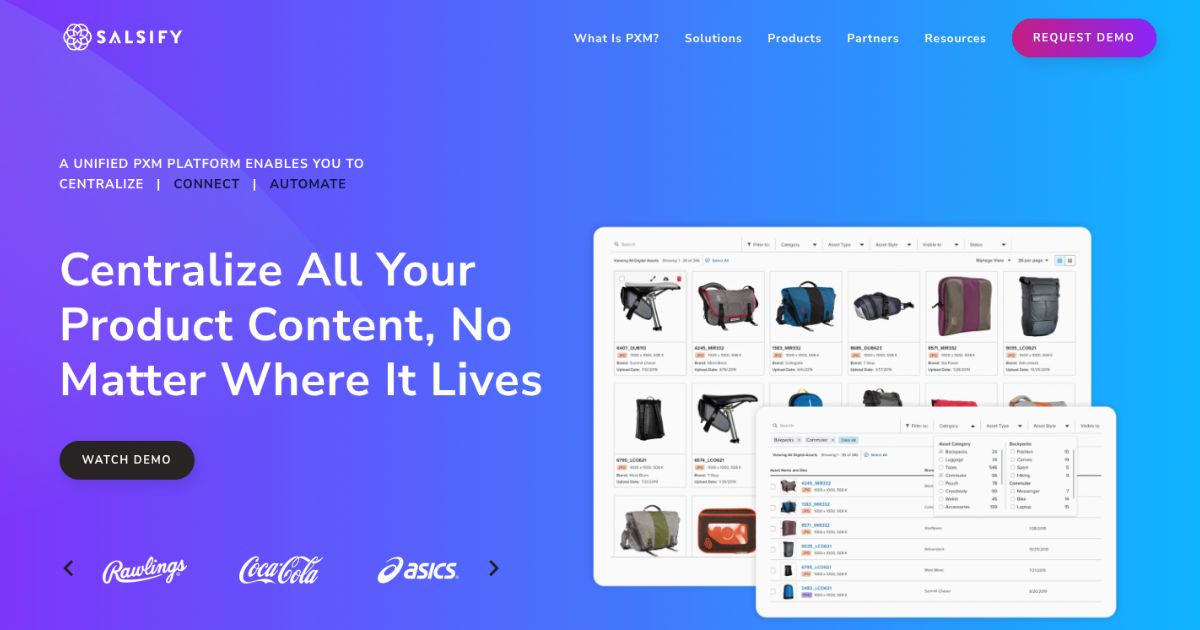
Salsify is often used by organizations that need to manage product content across both eCommerce and digital shelf channels. It combines PIM capabilities with syndication and content distribution, making it a strong fit for businesses that sell through multiple online channels and need consistency across them.
Pimberly
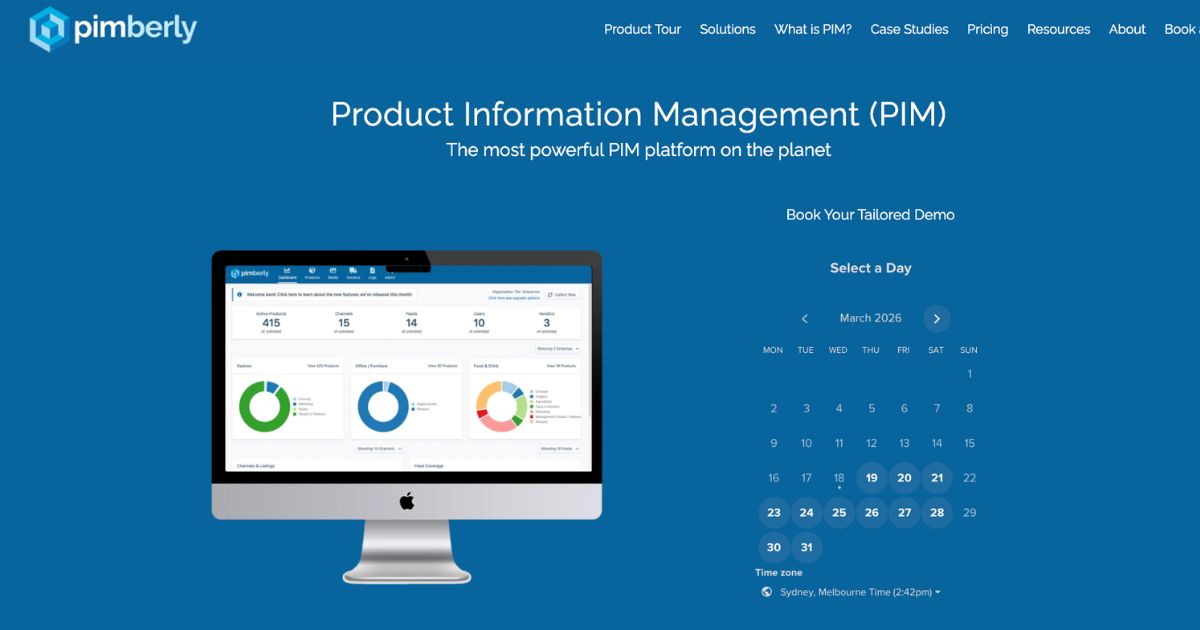
Pimberly is a flexible PIM solution typically used by mid-market manufacturers and distributors. It is often selected by teams looking to centralize product data quickly while maintaining the ability to adapt data structures and workflows as the business evolves.
Final Thought
There’s a pattern that shows up across digital initiatives in B2B.
Teams invest in technology expecting it to solve the problem. Over time, they realize the real challenge sits in how the business operates, aligns, and manages its data.
PIM brings that into focus quickly.
When it’s built on a strong foundation, it becomes a driver of better customer experiences and more scalable operations. When it’s not, it becomes another system carrying the same issues forward.

Related News & Insights

 Podcast
Every January, a handful of reports try to tell manufacturers and distributors where B2B eCommerce is…
 Insights & advice
Article Four of Four — The B2B Ecommerce Association White Paper Series on PIM Innovation The…
 Insights & advice
Brooke Logan did not set out to work in B2B eCommerce. Her degree is in biology….
 Podcast
Digital Alignment Is the Shift Too Many Still Miss in B2B eCommerce What if the real…
 Insights & advice
For decades, distributors have been the essential link in supply chains, bridging the gap between manufacturers…

Welcome to our comprehensive guide on B2B Payments, designed specifically for manufacturers and wholesale distributors. In…