

 Podcast
How Colleen Daly and Divyaanshu Makkar Are Reimagining AI, Customer Experience, and Operational Agility for Manufacturers and Distributors

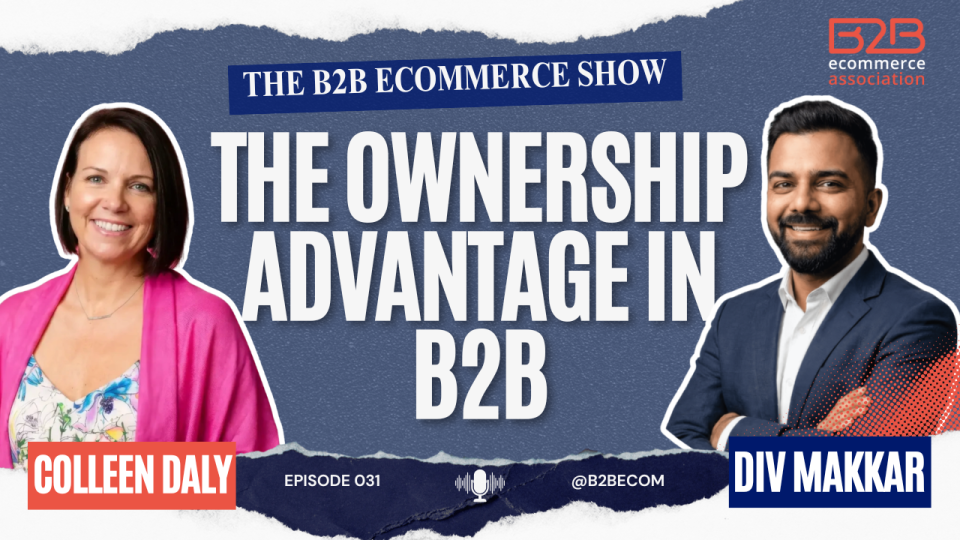
B2B eCommerce transformation rarely comes from technology alone. It happens when business leaders connect customer needs, operational realities, and emerging technology into a practical path forward.
That theme was front and center in a recent episode of the B2B eCommerce Show, where industry leader Justin King sat down with Colleen Daly, Vice President at The Howard Elliott Collection, and Divyaanshu Makkar, Co-Founder and CEO of WizCommerce.
Their conversation explored what it takes to modernize a manufacturer and importer in today’s environment, how AI can support lean teams, and why successful digital transformation starts with taking ownership of real business problems rather than chasing technology trends.
Two Perspectives, One Goal: Making B2B Commerce Work Better
The discussion brought together two complementary viewpoints.
Daly leads operations, customer experience, and digital initiatives at The Howard Elliott Collection, a home décor manufacturer and importer serving retailers, hospitality organizations, and eCommerce businesses. Her experience spans nearly two decades of growth across sales, operations, and customer-facing functions.
Makkar leads WizCommerce, an AI-powered commerce platform focused on helping wholesalers, distributors, and manufacturers simplify complex selling processes and improve productivity across sales and customer service teams.
Together, they offered a practical look at how manufacturers and distributors can use technology to support growth without adding unnecessary complexity.
The Advantage of a Lean, Cross-Functional Team
When asked about Howard Elliott’s organization, Daly described a company that embraces flexibility and shared ownership.
“That’s not my job is not in our vocabulary.”
That mindset has become a competitive advantage. Rather than operating through rigid departmental boundaries, Howard Elliott has built a culture where employees are cross-trained and encouraged to contribute wherever needed.
For many manufacturers and distributors, this approach reflects a growing reality. Digital transformation initiatives often succeed when organizations create alignment across customer service, sales, operations, and technology instead of treating each function as a separate silo.
As Daly explained, the company intentionally looks for people who are comfortable working within a lean environment where collaboration is expected and valued.
Why AI Resonates with Mid-Market Manufacturers and Distributors
One of the strongest themes from the conversation was the role of artificial intelligence in helping smaller teams accomplish more.
Howard Elliott operates with a relatively small workforce, making efficiency a strategic priority. Daly highlighted why new AI-powered tools continue to attract attention inside the organization.
“Any of these AI tools and new tech tools and things like that that can streamline our processes to make it easier for our team to work with less people is super appealing to us.”
That perspective mirrors a broader trend across B2B eCommerce. Manufacturers and distributors are increasingly evaluating AI through the lens of productivity, customer experience, and operational efficiency rather than viewing it as a standalone technology initiative.
For Makkar, the opportunity extends beyond automation. His vision centers on reducing the manual work that prevents teams from focusing on customers and strategic growth activities.
Modernization Requires More Than New Technology
During the conversation, Makkar explained why he wanted Daly to join the discussion.
“I think in the wholesale space, there very few companies that are very forward looking.”
His observation reflects a challenge facing many B2B organizations. Digital transformation is often discussed, but practical execution can be difficult when legacy processes, disconnected systems, and resource constraints compete for attention.
Organizations that make meaningful progress tend to share a common characteristic. They focus first on business outcomes, then identify technology that supports those goals.
This approach aligns with ongoing B2B eCommerce Association research and education efforts, which emphasize customer adoption, operational alignment, and business strategy as foundational elements of successful digital transformation.
Customer Experience Still Matters Most
While AI and automation generated significant discussion, customer experience remained a central theme.
Manufacturers and distributors serve increasingly digital buyers who expect accurate information, responsive service, and seamless interactions across channels. Meeting those expectations requires more than launching new software.
It requires organizations to rethink workflows, empower employees, and remove friction throughout the customer journey.
The conversation highlighted an important reality for B2B leaders: technology delivers value when it helps customers accomplish their jobs more efficiently and helps internal teams serve those customers more effectively.
What Manufacturers and Distributors Can Learn
Several practical lessons emerged from the discussion:
- Build a culture where teams share responsibility for outcomes.
- Evaluate AI through the lens of productivity and customer value.
- Focus on solving operational problems before selecting technology.
- Invest in customer experience improvements that simplify buying and service interactions.
- Create alignment between people, process, and technology.
These principles apply whether an organization is beginning its digital transformation journey or refining an established B2B eCommerce strategy.
Further Reading
Related Resources from B2BEA
- B2B eCommerce Association
- Customer Adoption Resources
- Digital Strategy and Transformation Content
- B2B eCommerce Education and Training
Industry Research and Insights
- Gartner: Composable Commerce Explained
- McKinsey: The New B2B Growth Equation
- Forrester: State of B2B Commerce
- Digital Commerce 360 Research
Conclusion
The conversation between Colleen Daly and Divyaanshu Makkar offered a practical view of where B2B eCommerce is headed. Manufacturers and distributors are navigating growing customer expectations, rapid advances in AI, and increasing pressure to operate efficiently.
Organizations that succeed will be those that combine technology with strong operational discipline, customer-focused thinking, and a culture that embraces continuous improvement.
As Daly’s experience demonstrates, transformation is often less about adding layers of complexity and more about creating an environment where people, processes, and technology work together to help customers succeed.

Related News & Insights
 Podcast
Adrienne Hartman has spent 26 years turning technical instinct into business judgment, and 19 of those…
 Podcast
The founder and CEO of Luminos Labs has spent 16 years watching digital commerce projects stall…
 Podcast
TreviPay’s Piers Gorman on the expectation gap between buyers and sellers, the fraud landscape reshaping credit…

 Insights & advice
Article Four of Four — The B2B Ecommerce Association White Paper Series on PIM Innovation The…
 Insights & advice
Article Three of Four — The B2B Ecommerce Association White Paper Series on PIM Innovation Most…
 Insights & advice
When I speak with executives at manufacturing and distribution companies about B2B eCommerce, the conversation tends…