

 Insights & advice
Courtney Seim on How Listening to Customers Built Cameron Ashley’s B2B eCommerce Platform

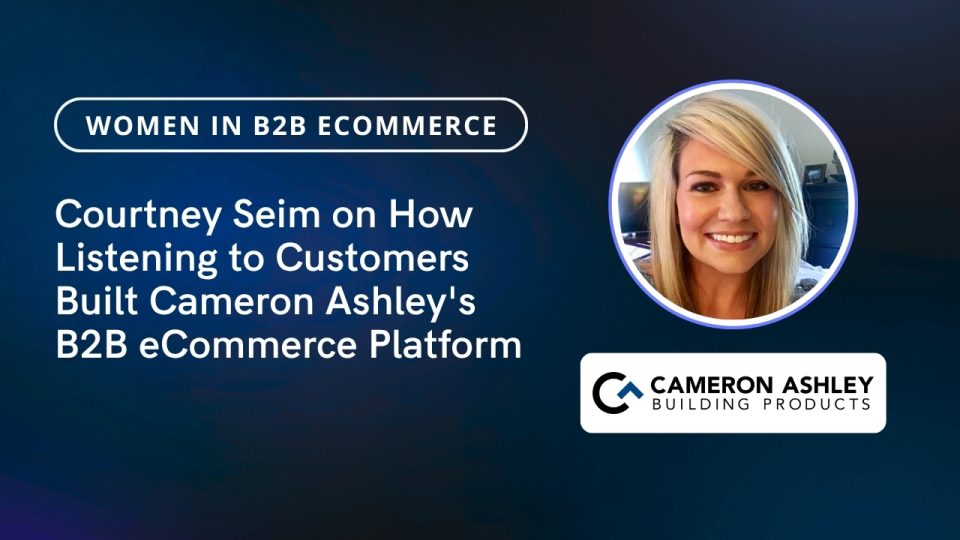
A B2B eCommerce site built entirely from customer conversations, rather than a template borrowed from B2C, tends to look different from the outside and perform differently on adoption. That is the story behind the digital platform at Cameron Ashley Building Products, a distributor of building materials to lumber dealers and contractors across the United States. Courtney Seim, Cameron Ashley’s Vice President of Customer Experience, joined the B2BEA Women in B2B eCommerce series to talk about how the company got its first website built, why customer feedback still drives the roadmap, and what she is seeing shift in who actually uses a B2B site.
From Regional Credit Manager to Digital Lead
Seim has spent 14 years at Cameron Ashley, and her path into digital leadership did not start in a technology role. She began as a regional credit manager, working directly with customers on the operational side of the business. “I think it was always about reducing friction for our customers, and what can I do to make their experience with us better, or make it easier to buy from us,” she said. That orientation carried forward when the company decided to build its first website. “That’s still my job. It’s to reduce friction and make it easy to buy from Cameron Ashley.”
The website project itself started with a direct mandate from a new CEO. “He comes in and asks: who leads digital?” Seim said. “We’d didn’t have a website, we weren’t there yet. And so he said, ‘Courtney, that’s going to be you.'” While she had no formal technical background and no coding experience, she knew she could “listen to people and figure out what they want, or what might make their experience better or easier, and then communicate that to the technology team.”
Building a Site Customers Actually Asked For
Cameron Ashley’s platform took shape over years of conversations with customer segments that want different things from a digital experience. “What does a contractor want versus what does a lumber dealer want” became a recurring question as the team built out the site, Seim said. That segment-by-segment approach reflects what B2BEA’s guidance on customer journey mapping identifies as a strategic necessity in complex B2B sales environments, where a single generic path rarely serves every buyer type.
Seim does not see B2B and B2C experience expectations as separate anymore. “The lines between B2B and B2C aren’t there anymore, really,” she said. “We all want the same experience, whether we’re dealing with a B2B company or a B2C company.” She added that a B2B site should not have to compromise on that front: “I don’t think you have to sacrifice just because it’s a B2B site instead of a B2C site.”
Cameron Ashley’s approach to closing that gap runs through continuous customer feedback rather than a one-time build. “We do a lot of customer surveys, and we’re always collecting feedback,” Seim said. She credited the company’s recognition with a B2BEA digital adoption award last fall to the same discipline. “All along we thought that we were doing strong work around adoption, but the outside recognition was a big win,” she said. “We really did build the site our customers asked for, something that we thought they would be proud to use and take some ownership of, since we all built it together.” That pattern of adoption built on customer input mirrors what B2BEA has documented as the difference between a launched platform and one customers actually use, where some organizations see more than 70 percent of sales move online while others stall below 30 percent.
Who Is Actually Giving the Feedback
Seim has also noticed a shift in whose voice shows up in that feedback. Roughly 90 percent of Cameron Ashley’s customers are family-owned businesses, whether a lumberyard or a contractor, and the buying decisions run through more than one person in the household. “The contractor might be the one out doing the jobs and ordering the materials, but then his wife’s right there beside him,” Seim said. “She’s the one that’s doing his accounts payable, accounts receivable, that sort of thing.” She said that dynamic shows up directly in the site’s usage data. “I feel like most women tend to be the online shoppers, and so a lot of the feedback we get, comparisons between the B2C sites and the B2B sites, are from those women helping along in the family businesses.” That observation lines up with a broader digital-first shift in B2B buying behavior. Digital Commerce 360 reported in 2025 that younger, digitally fluent buyers, regardless of role, are increasingly setting the bar for what a B2B site needs to deliver.
Where AI Fits Today
Cameron Ashley’s use of AI so far is narrow and deliberate, concentrated mainly in search. Seim was careful to frame it as a complement to the team rather than a replacement. “I think we use it where we can,” she said, “but we don’t want to replace anyone with it.” She also pointed to cost as an open question that the industry has not settled. “The cost of people versus the cost of AI, everyone’s going to have to figure out the right mix of all those things,” she said. Looking ahead, she framed the balance between efficiency and relationships as the defining challenge of the next stretch of B2B digital work. “I think that’ll be the big thing, that balance between customer relationships and being efficient with using AI.”
Underneath the technology choices, Seim’s read on what actually drives adoption stays consistent: proximity to the customer. “I would just say listen more than you speak,” she said, describing the discipline behind Cameron Ashley’s digital program. “People are always going to want to tell you things, and tell you what they want, and then you figure out how to be the best and improve their experience with the company.”
Join the Women in B2B eCommerce Community
B2BEA’s Women in B2B eCommerce program is a growing network of practitioners, vendors, and leaders driving the industry forward. To stay connected, follow the topic page on b2bea.org and join the Women in B2B eCommerce LinkedIn group.
For more on Cameron Ashley Building Products, visit cameronashleybp.com, and connect with Courtney Seim on LinkedIn.
Related News & Insights
 Podcast
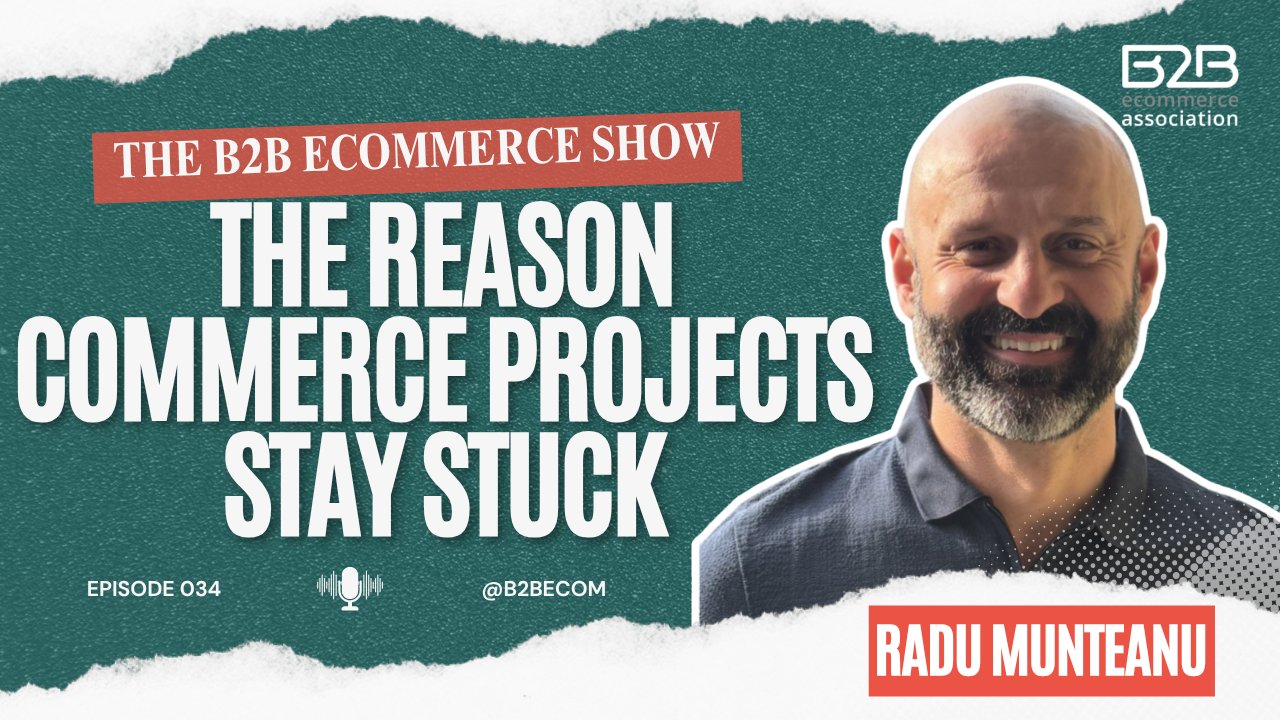
The founder and CEO of Luminos Labs has spent 16 years watching digital commerce projects stall…
 Podcast
Every January, a handful of reports try to tell manufacturers and distributors where B2B eCommerce is…
 Insights & advice
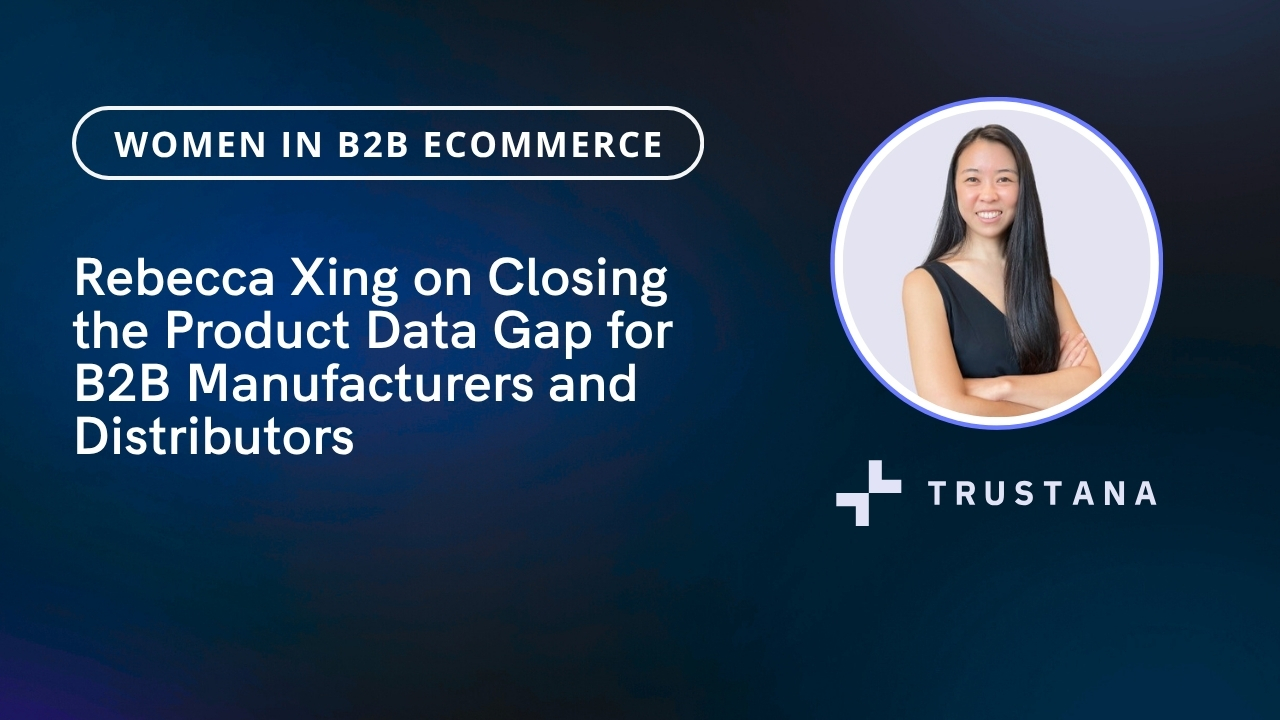
The next phase of B2B eCommerce will be built on better product data. That was the…
 Insights & advice
In B2B eCommerce, digital transformation rarely follows a straight line. Manufacturers and distributors face a layered…
 Insights & advice
Tonia Coletta spent fifteen years in the beer industry before she ever thought seriously about millwork….
 Insights & advice
When Stacy Hanks joined SureWerx as Vice President of Global Digital Commerce, she brought something the…